Sleeping in the Sommerville Basin


July 31, 2011 -

The Sommerville Basin is a small Jamaica Bay inlet in The Rockaways, located on the border between the Queens neighborhoods of Arverne and Edgemere. Fishermen and crabbers ply its waters from all sides, despite being downshore from the Edgemere Landfill, an abandoned toxic dump which is leeching trash into the bay nearby. A warning sign posted by the NY Department of Health reads "no more than one meal per week of Bluefish, American Eels, or Striped Bass from Jamaica Bay shall be eaten," but that does not seem to deter the fishermen of the basin, who proudly describe catching and grilling fish over three feet long.

They cast their lines in the shadow of the Ocean Bay Apartments, which are more commonly known as the Edgemere Houses, one of New York City's most notorious housing projects. "Cops at one time called [it] "Edgefear" because it was the worst public housing in the city by any indicator you care to choose," according to The Wave. The neighborhood of northern Edgemere, on the eastern side of the Sommerville Basin, is plagued by gang warfare, with abandoned waterfront buildings and marinas covered in gang graffiti. A pack of wild dogs lives in the park behind the Edgemere Houses, near city-owned fishing piers that jut out above the Sommerville Basin.

Sommerville Fisherman and Edgemere Houses


Sommerville Crabber and JFK

The main feature of the Sommerville Basin is Marina 59, a small three pier marina primarily used to store fishing vessels. Home to a surplus of abandoned boats, the marina is patrolled by a herd of goats which trim the weeds underneath vessels with names like "Parking Lot Pimp," "Beeracuda," "Like It Wet III," and "Wasting Away - Margarittaville." The marina rents kayaks and motorboats, has a bait shop selling hot coffee and worms, and is surrounded by a razor wire topped fence. With its remote location, "Marina 59 is a money-losing venture," according to the NY Times.

This summer, however, an improbably popular resort has sprung up inside the marina. Named the Boggsville Boatel and Boat-In Theater, it is a small collection of refurbished abandoned boats clustered around a floating platform at the end of a pier. For a donation of $50 to $100 a night, visitors can stay onboard a private vessel, be entertained by either a movie or lecture, and can paddle out into the basin. Created by artist Constance Hockaday, The Boatel has been described as "New York City’s newest and perhaps loopiest tourist outpost," by the NY Times, and is entirely booked for the summer.

Spending a night at The Boatel is surprisingly peaceful. The sounds of the city - jets taking off from JFK, elevated subway trains, traffic from the Edgemere Houses - tend to fade away into the background as gentle waves rock The Boatel platform. Despite its urban setting, the Sommerville Basin is a pleasant and quiet refuge. Several fishermen stay late into the night with their boats.


Abandoned Boat


Goats and Boats

One hundred years ago, The Rockaways were the main summer escape for New York City, with grand hotels, amusement parks, tent cities and thousands of seasonal bungalows. At its peak, the peninsula was known as "The Playground of New York," according to The Wave, but by the 1960's most of the eastern section of The Rockaways had become blighted by failed development schemes, arson, abandoned bungalows, and "one of the city's highest concentrations of public housing," according to the NY Times. The neighborhoods of Arverne, Edgemere and Far Rockaway - located at the farthest eastern end of the peninsula - were hit the hardest.

These neighborhoods are still struggling to recover today. In recent years, however, redevelopment and gentrification have slowly reached out to transform the The Rockaways. In Far Rockaway, artists have been buying and refurbishing some of the few remaining bungalows. In Arverne, empty blocks are being transformed into Arverne By The Sea - "New York City’s newest and most improbable neighborhood," according to New York Magazine. "Over the last few summers, this sandy and pockmarked peninsula has become an unlikely hangout for young, artsy types," according to the NY Times. It remains to be seen whether the new-found popularity of The Rockways will create permanent change, or whether the artists will all float away when this latest season of summers is over.

---
For more photo essays from The Rockaways, please visit The North Edgemere Shore (2010) The South Edgemere Wasteland (2010), The Edgemere Landfill (2010), Hammels Wye (2010) and Far Rockaway: Abandoned Bungalows (2009).


A Dock


The Four C's


Aboard the Four C's


Boatel Platform


The Edgemere Houses


Boatel Boating


Sommerville Basin Shores


Abandoned Dory


Sunken Steamer


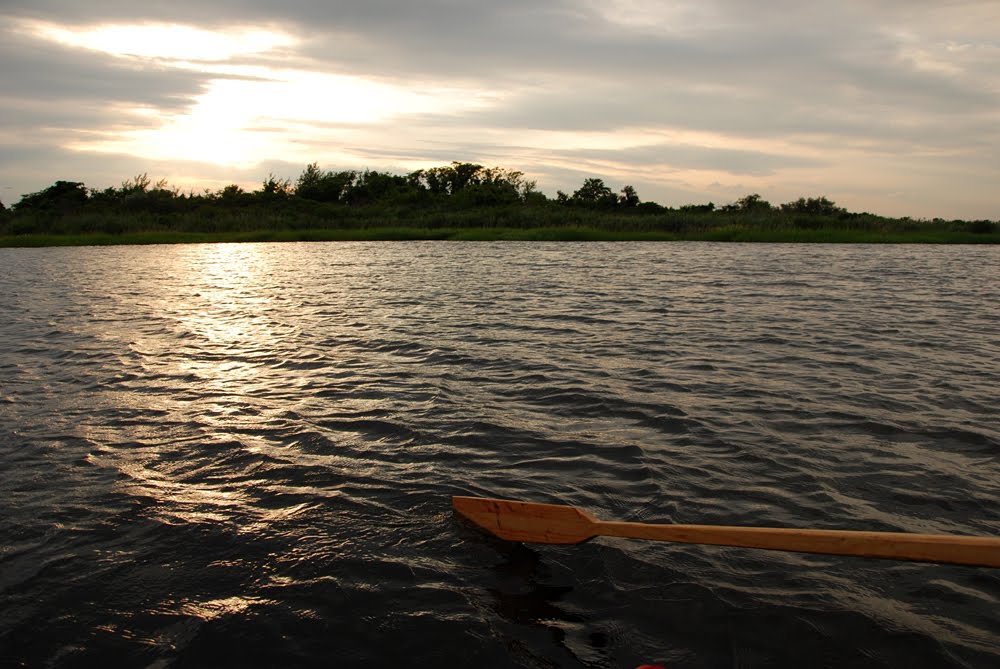
Sunset Oar


Marina 59 Sunset


Twilight at the Boatel


Marina 59 and Edgemere Houses


Boat Lift


Night on the Marina


Boatel Night


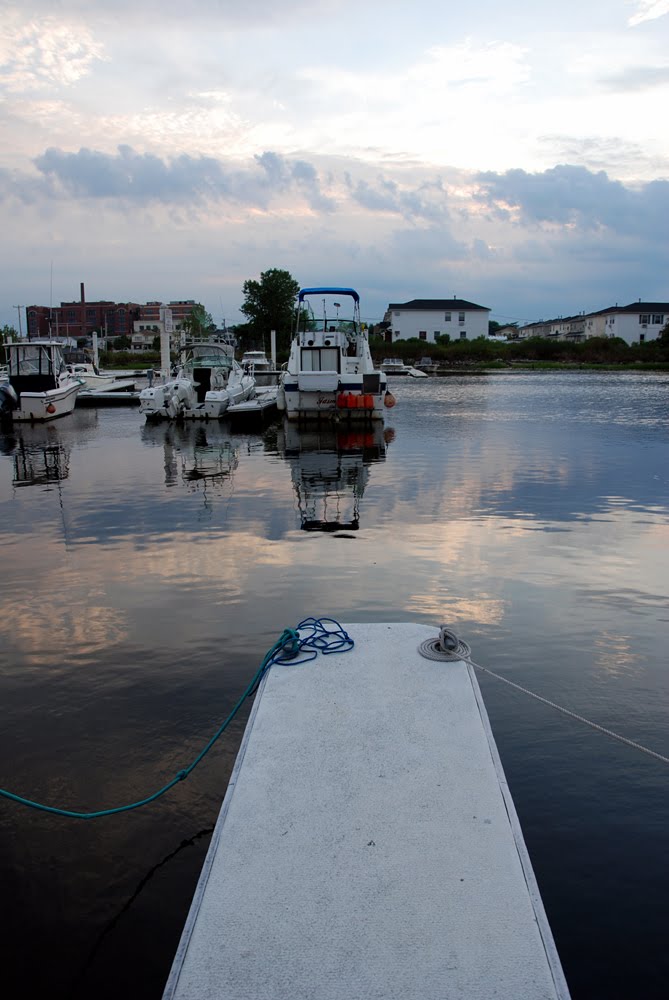
Boatel Pier


The Boatel

Drawbridge, California

July 20, 2011 -

The San Francisco Bay Area is home to over 7 million people and 12 major cities. It is one of the largest urban hubs in the United States. However, its southern end is anchored by a landscape more similar to the Colorado plains, with vast open vistas, rolling hills, and empty dirt roads lined with decaying carcasses. In the middle of this incongruous landscape lies a collection of empty buildings sinking into the mud of an abandoned island. This is Drawbridge, the Silicon Valley ghost town.

Officially given its name in 1887, Drawbridge started as a train stop on Station Island, between bridges over Mud Creek and Coyote Creek. Due to an abundance of fish and birds, it soon became a popular destination for hunters. At its peak, Drawbridge held over 90 structures - hotels, restaurants, cabins, and dozens of rod & gun clubs linked together by narrow boardwalks. Its skies were so full of birds that hunting was sometimes done with a cannon. "Legend has it that five hundred to one thousand ducks would fall out of the sky after one mighty blast," according to an excellent history compiled by the Soft Underbelly of San Jose.

Drawbridge Diagonals

Today, the skies above Station Island are nearly empty and the water nearby is dark red, fouled by algae spawning in abandoned salt harvesting ponds. After its peak in the 1920's and 30's, Drawbridge became a victim of the industrialization and development of the Bay Area. The wetlands around Station Island were parcelled off to salt harvesters while nearby communities like San Jose pumped water out of the area, causing Drawbridge to sink into the mud, and then pumped raw sewage back in, poisoning its waterways, according to Ghost Towns in the USA and Canada. The entire area is "now in the middle of a $400 million effort to restore South Bay wetlands," according to the SF Chronicle, and "the story of Drawbridge is, in many ways, the story of the West."

Station Island is now a part of the Don Edwards San Francisco Bay National Wildlife Refuge, "the first urban National Wildlife Refuge established in the United States," according to the US Fish and Wildlife Service, including "30,000 acres of open bay, salt pond, salt marsh, mudflat, upland and vernal pool habitats." Drawbridge has been left to collapse, a silent witness of the decline and subsequent restoration of the Bay Area.

---
The waterfront of the San Francisco Bay Area has long been a source of inspiration for my photographs of New York City. For more photo essays of the San Francisco Bay, please visit The San Francisco Police Athletic Club (2010) and The San Francisco Naval Shipyard (2009)


The Boardwalk


Red Waters


Floating Ghost House


Ghost House


Where Is Home?


Dead Dog


In The Salt Pond


Water Tower


Boardwalk and Shack


Slough View


In the Window (2008)


Ghost House Diagonals


Shelves and Windows


Track Diagonals


Shotgun Shack (2008)


Backyards (2008)


Ladder


Hills and Prairie (2008)


Train Passing (2008)

Brooklyn's Bridges: Engineering as Art and Inspiration


From June 28th to September 18th, 2011, the Brooklyn Public Library featured my work in a group exhibition titled Brooklyn's Bridges: Engineering as Art and Inspiration. Jay Kaplan, Director of Programs & Exhibitions at the Brooklyn Public Library, wrote of the exhibit: "Brooklyn's bridges have long fascinated artists in a wide range of media. This exhibition brings together the work of 17 visual artists who have chosen to explore these omnipresent and monumental features of our daily lives. Their work reflects a range of responses - among which we can readily detect awe, a sense of mystery, scientific curiosity and simple sensual delight..."

The exhibit included one of my photographs from inside the Domino Sugar Refinery, looking out onto the Williamsburg Bridge. The image - titled "Domino Sugar Refinery" (2007) - is in the permanent collection of the Brooklyn Public Library, and this was the fourth Brooklyn Library exhibit to include my work. For a list of other exhibits, please visit this page. "Brooklyn's Bridges" was on display in the Grand Lobby of the Central Library, which is located on Grand Army Plaza. For more information, please visit the library's webpage.

Domino Sugar Refinery (2007)

Urban Camping in Staten Island


June 22, 2011 -

Camping in New York City can be a challenge. There is only one campground open to the public inside city limits, and it has just four campsites. In a city of over 8 million people, getting a reservation at Floyd Bennett Airfield's campground can be difficult, and it is often pre-booked for Native American powwows and Gypsy festivals. Recognizing this, the United States Secretary of the Interior announced a plan on June 13th to transform Floyd Bennett from an abandoned municipal airport into "America's largest urban park campground," according to NY1, with up to 600 campsites available sometime in the future.

In the meantime, a variety of other options are occasionally available to urban campers. Several artists have recently created unique camping opportunities, including The Encampment (2007) on Roosevelt Island, and House of Cards (2009), a shanty timeshare inside the Brooklyn Navy Yard. There are also a handful of private campgrounds inside the city, like Pouch Camp - the Boy Scouts' private 143-acre oasis in Staten Island. For most New Yorkers, however, the best bet for finding a legal campsite inside New York City is winning a lottery to sleep in a park.

The Encampment (2007)


House of Cards (2009)

The Urban Park Rangers' Family Camping program is "one of the better-kept secrets of the city," according to the NY Times, and throughout the summer, New Yorkers can apply to win a camping spot in the Rangers' lottery system. Some of the more popular campouts include nights in Central Park, Prospect Park and Fort Greene Park. However, the program also offers camping opportunities in many lesser-known parks in the five boroughs that make far superior campsites. Camping with the Urban Park Rangers is free, and includes a tent, food and campfire. All that is needed is a sleeping bag.

One of the best camping locations offered in the Urban Park Ranger lottery is at Wolfe's Pond Park, "one of Staten Island's largest parks," which includes a beach, pond, picnic area, forest and mountain biking trails. Although Wolfe's Pond is situated near the far southern end of the city, camping in the park is still a uniquely urban experience. The park itself highlights the harsh contrast between urban and natural. One section of its beach is open for swimming, manned with lifeguards, and is regularly raked free of debris and seaweed. Just down the beach, though, the uncleaned section is littered with syringes and "more tampon applicators than I have ever seen in my life," according to one camper. In Wolfe's Pond itself, fishermen ply waters littered with empty beer cans and 40's.

After dark, when the park is largely emptied out, the Urban Park Rangers lead a night hike through the forest, over bridges and alongside patches of poison ivy, while birds and insects compete with car alarms and a steady stream of nearby traffic. On the deserted beach, waves crash at the edge of an empty lifeguard station as barges and tankers slip by the southern end of Staten Island. The distant glow of fireworks in Coney Island is a reminder that the crowds of the city are just a few miles away. Back at the campground, a campfire in the darkness erases any lingering memories of the city.

---
For more information on the Urban Park Rangers' Family Camping program, please visit their website.


Wolfe's Pond


Dark Bridge


Closed Beach


Sand & Syringe


Fire Pit


Wolfe's Pond Sunset


Campground Sunset


Classic A Frame


Night Beach


BBQ Bonfire


Urban Rangers Campfire