Staten Island: North Shore


January 31st, 2008 -

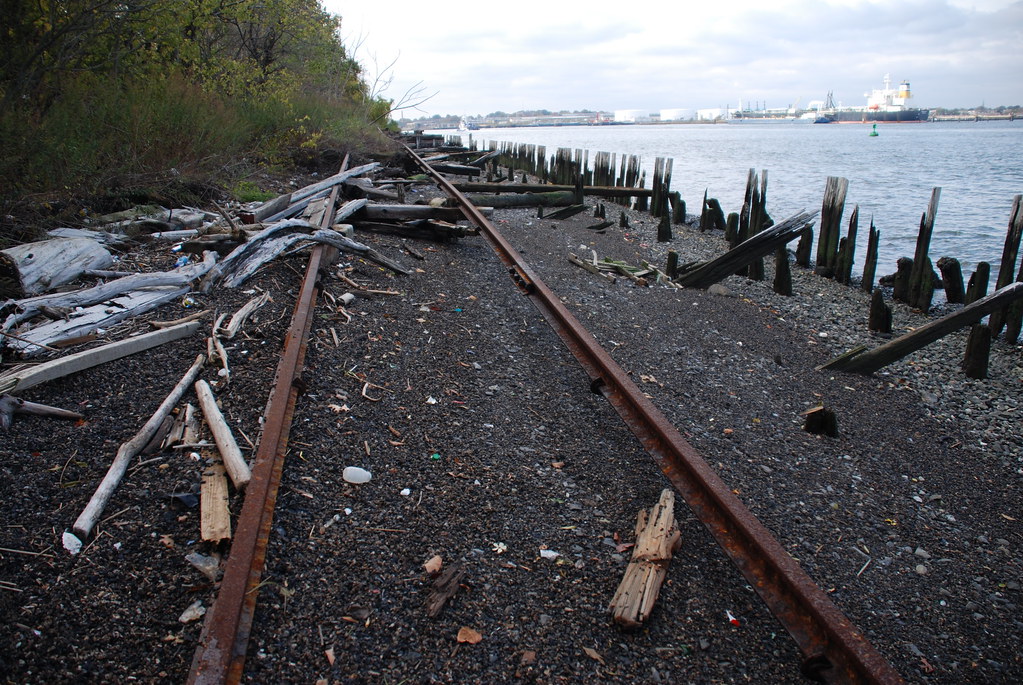
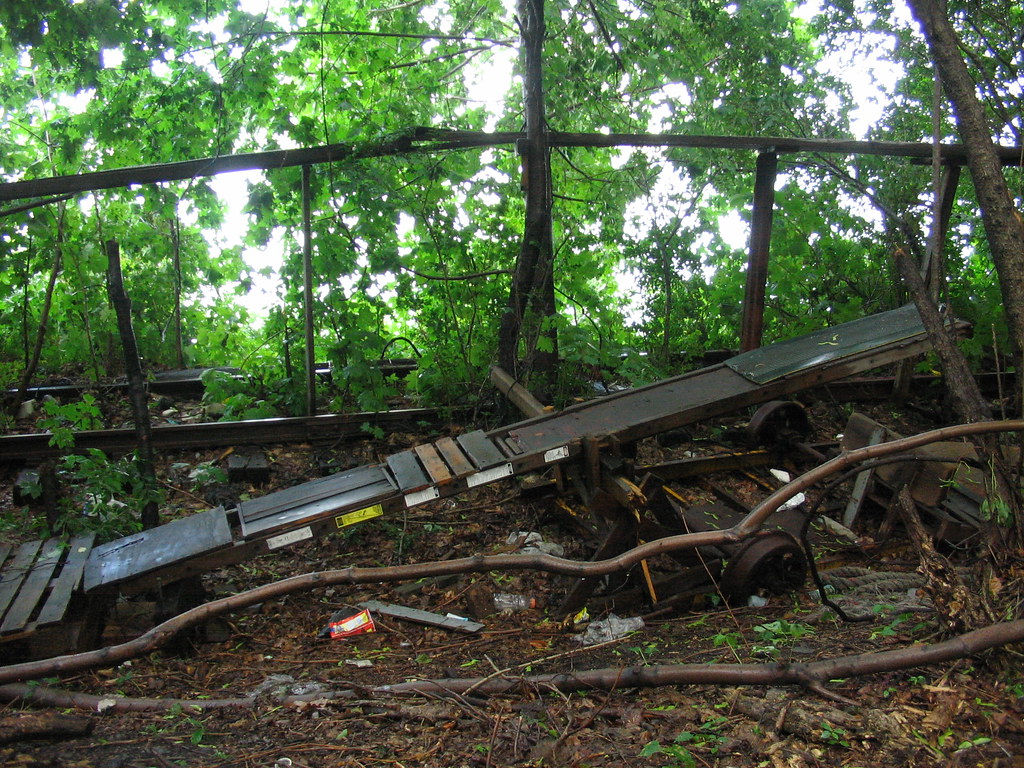
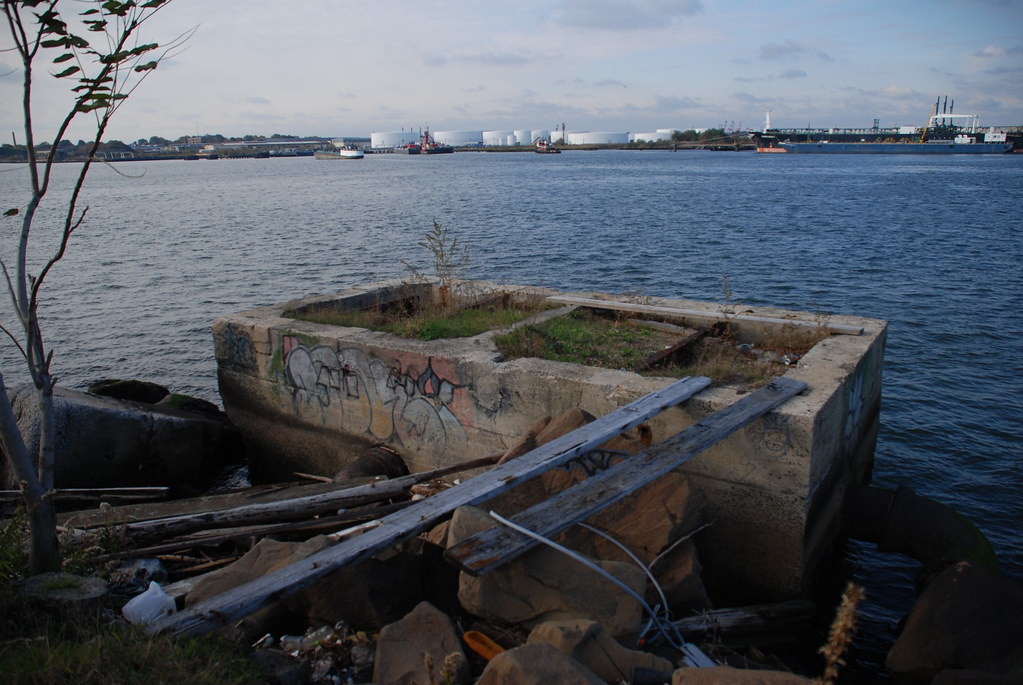
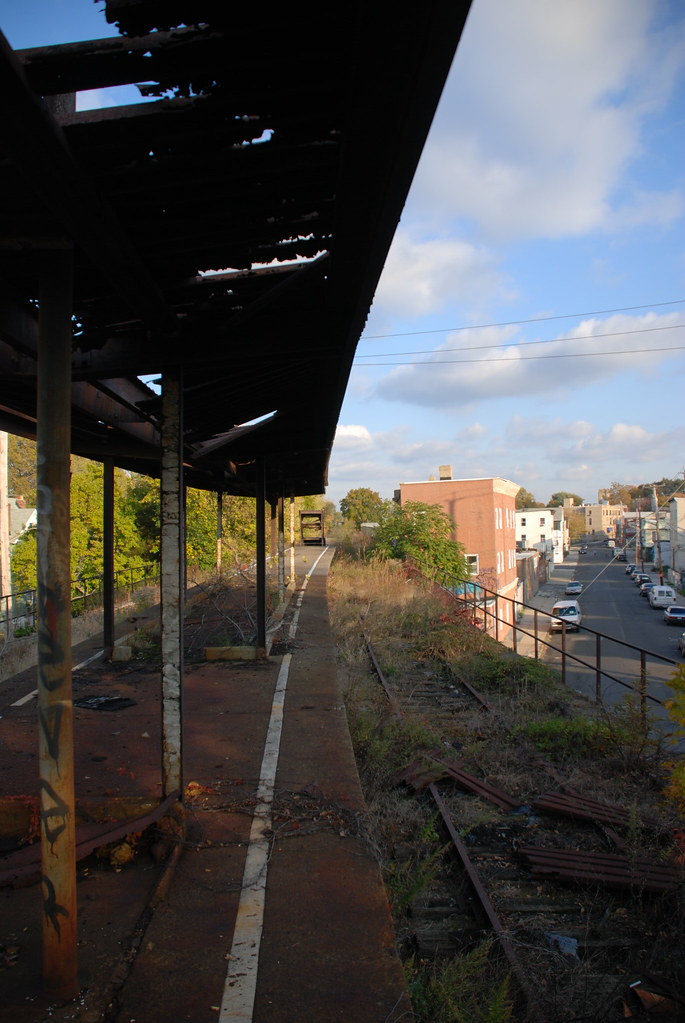
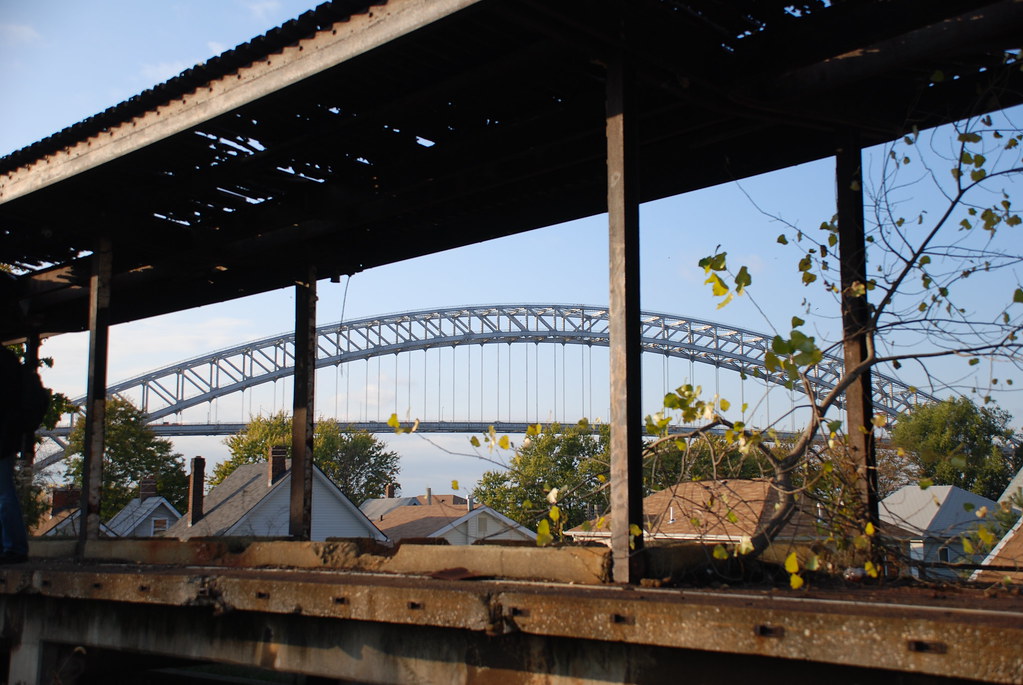
An abandoned rail line traces the edge of Staten Island's northern shore. Before moving inland into a series of abandoned stations, the line passes by decommissioned factories, several shipyards, a homemade BMX stunt track, and travels over sandy beaches littered with debris. In some places, the rails hang unsupported in mid-air. In others, fisherman make use of the old tracks to reach their private fishing platforms. The north shore of Staten Island is still a wild place, where birdwatchers, abandoned boats and heavy industry collide.

The old North Shore Train Line was built in 1883 and abandoned in 1953. The westernmost section of track, serving the Arthur Kill and connecting to New Jersey, was recently renovated and reopened in 2007. According the the Mayors Office, this reactivation "...creates more than 330 permanent jobs and reduces truck traffic on [Staten] Island by 100,000 trips per year." A $360 million plan to reactivate the entire north shore line are being considered by congress. More information on the train line can be found at Forgotten New York. More photos from Staten Island can be seen here on Flickr.


Factory Deconstruction


Decommissioned


Hanging Tracks


BMX See-Saw


Fishermans Perch


Abandoned Elevated Station


Bayonne Bridge


Abandoned Sunken Station


Platform and Bridge

Brooklyn Navy Yard: Building 128

January 16th, 2008 -

Building 128 is a complex of massive warehouses inside the Brooklyn Navy Yard, "as big and hulking as an airport hangar," according to the NY Times. Building 128 was built in 1899, and was a "steel structure... used to assemble large boiler engines and fabricated sections of naval vessels," according to Historic Structures - a document from the Brooklyn Navy Yard Development Corporation. It is currently slated for destruction, as "BNYDC will adaptively reuse the building’s foundation and steel and develop a Food Complex."

According to Mayor Bloomberg this adaptive reuse means "partial demolition," as "three new industrial buildings will replace a large, deteriorating structure." A Mayor's Office press release states these new buildings will contain "over 300,000 square feet of food manufacturing and processing space." As demolition proceeds on this historic structure, Mayor Bloomberg unveiled a mural from Building 128 as "the first artifact in the Historical Center" at the Navy Yard.

The following photographs take a last look at the interior of this 109 year old complex.


For more photoessays from the Brooklyn Navy Yard, click here.


Brooklyn Navy Yard: Building 1


December 18th, 2007 -

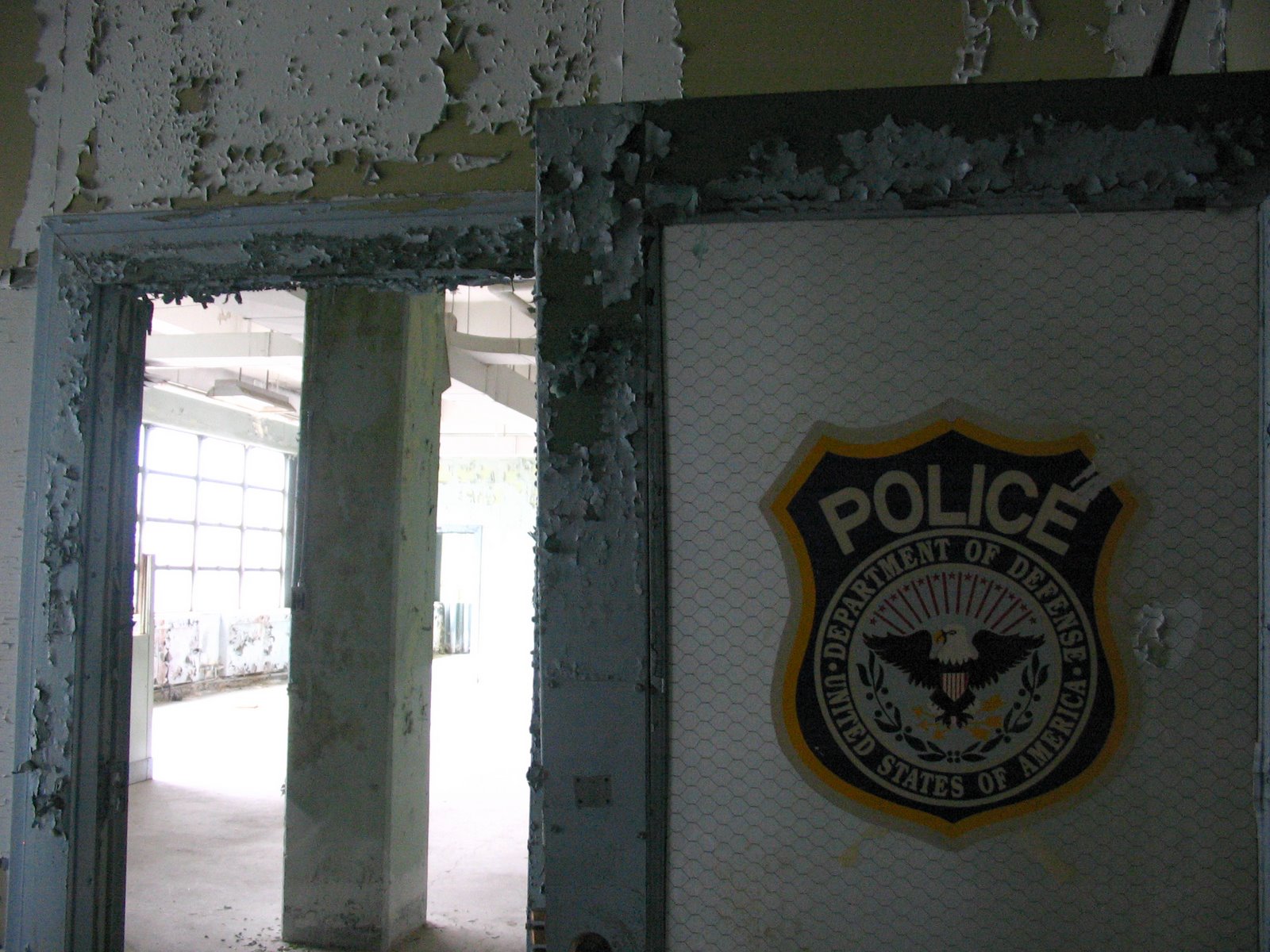
The Brooklyn Navy Yard's Building 1 was formerly a barracks, complete with movie theater, laundry and rifle range. It has been empty for years, with paint peeling off the walls and broken windows throughout. Building 1 is now being leased to Steiner Studios, and is an important part of their larger expansion at the Navy Yard. Recent articles at Curbed, Brownstoner and the New York Post discuss this planned expansion in detail. In the meantime, Building 1 will soon be completely renovated by Steiner Studios. This is a last look at its original interior.

For more photoessays from the Brooklyn Navy Yard, click here.

Corner Office


Decayed Doors


Department of Defense


Measurement


Laundry


Stay Navy


Falling


Projection Booth


Rooftop Radio Tower

The Freedom Tunnel - "Covered Tracks"


"Covered Tracks" is a short documentary inspired by my photography of industrial New York City. The film explores The Freedom Tunnel, a 50-block-long train tunnel running underneath Manhattan's Upper West Side. The tunnel was built by Robert Moses in the 1930's and once housed a huge homeless population. Today, it is largely deserted, although it contains an active Amtrak line. Children play in Riverside Park overhead as trains thunder through the wreckage below, past decades-old graffiti and the ruins of an underground homeless city.

"Covered Tracks" is a gritty portrait of this beautiful and rarely seen part of New York City. I directed the film, and co-produced it with Meghan O'Hara. Photographer Nate Dorr was an associate producer of the film. To create "Covered Tracks," we filmed for one year, pushing a homemade dolly down miles of train tracks.

"Covered Tracks" has screened at film festivals around the world, including Slamdance, the San Francisco Independent Film Festival, the Boston Underground Film Festival, and the Rooftop Film Festival in New York. It won the "Directors Award" at the Black Maria Film Festival.

For more information, visit the films myspace page.


Brooklyn Navy Yard: GMD Shipyard


November 28th, 2007 -

The GMD Shipyard lies within the Brooklyn Navy Yard and is rarely - if ever - open to the public. The shipyard houses three graving docks and at least eight cranes. After Ikea's recent destruction of the Todd Shipyard in Red Hook, GMD has become a vital resource on the waterfront. It is Brooklyn's last industrial ship repair facility and one of New York City's last remaining shipyards. Recently, according to workers in the Navy Yard, it was threatened with destruction, to be replaced by an extension of the film studios in the Navy Yard.

These photos were taken during a Portside New York event, a group that "seeks to breathe life into the relationship between landside communities and the maritime sector—to the advantage of both."

For more photoessays from the Brooklyn Navy Yard, click here.


Bush Terminal Park: Industrial Apple Orchard


November 14th, 2007 -

Brooklyn's Bush Terminal is located on the Sunset Park waterfront. It houses a collection of warehouses and train tracks. Behind this industrial area lies a fenced off "brownfield" - including a decades-old apple orchard, two unnatural ponds and a series of man-made bays. As explained by the NYC Council's Waterfronts Committee in an oversight document, the area was an active port until 1974, when its series of piers was filled in with "illegal disposal of liquid wastes at the landfill including oils, oil sludges, and wastewaters."

A total of $36 million has now been dedicated to redevelop this 23 acre site into a park. According to the official press release, this includes "the largest brownfield grant ever awarded by the state" of New York. A proposal map of the development included in a remediation document by the Department of Environmental Conservation includes plans for a mini golf course and children's soccer fields where this poisoned apple orchard now exists.

The redevelopment of Bush Terminal, like the nearby South Brooklyn Marine Terminal and the Brooklyn Army Terminal, is controlled by the New York City Economic Development Corporation (NYCEDC).

---
For more photo essays from Brooklyn's Sunset Park please visit the Brooklyn Army Terminal (2008), the South Brooklyn Marine Terminal (2009), Empire Electric (2009), S & S Machinery (2010) and the 68th Police Precinct (2011).


Manhattan Skyline


Bush Terminal Apple Orchard


Industrial Apples


Bush Terminal Pond


Abandoned Pier - Low Tide


Broken Landfill Cap


Dead Pier


Unnatural Bay


Forest of Green


Sunset Park Brownfield